12 Claude Skills for an Innovation Program That Earns Its Budget
Charter the program, design gates that ask a question rather than hand out scores, and keep the ledger. Then carry one bet through: the challenge, the ideation, the customer interviews, an experiment whose thresholds were written first, the gate review, and the sunset memo when the answer is no.
01What these skills are
A program that can say what each bet cost and what it proved
Most firms of 20 to 200 people do not have an innovation portfolio; they have a pile. Six things are “in progress”, and nothing gets killed, because killing something takes a rule somebody wrote down while calm.
One position holds the pack together: evidence comes from the market, and decisions come from named humans.
Claude designs the test and keeps the ledger. It never simulates a customer, scores an idea, or makes the kill call. The interviews happen with real people, and every gate decision carries the name of the person who made it.
Mechanically, each skill is one folder with a SKILL.md file. Two write the program's rules once, three run on a cadence, and seven run per initiative, in order, from the challenge to the sunset. They work from one Claude Project per program.
Download all 12 skills
One zip: ready-to-install skill zips and readable SKILL.md files. No templates to fill in — each skill reads what the earlier ones wrote, by file name. Free, no signup. The same 12 skills live in our open repo, if you would rather read them before you install them.
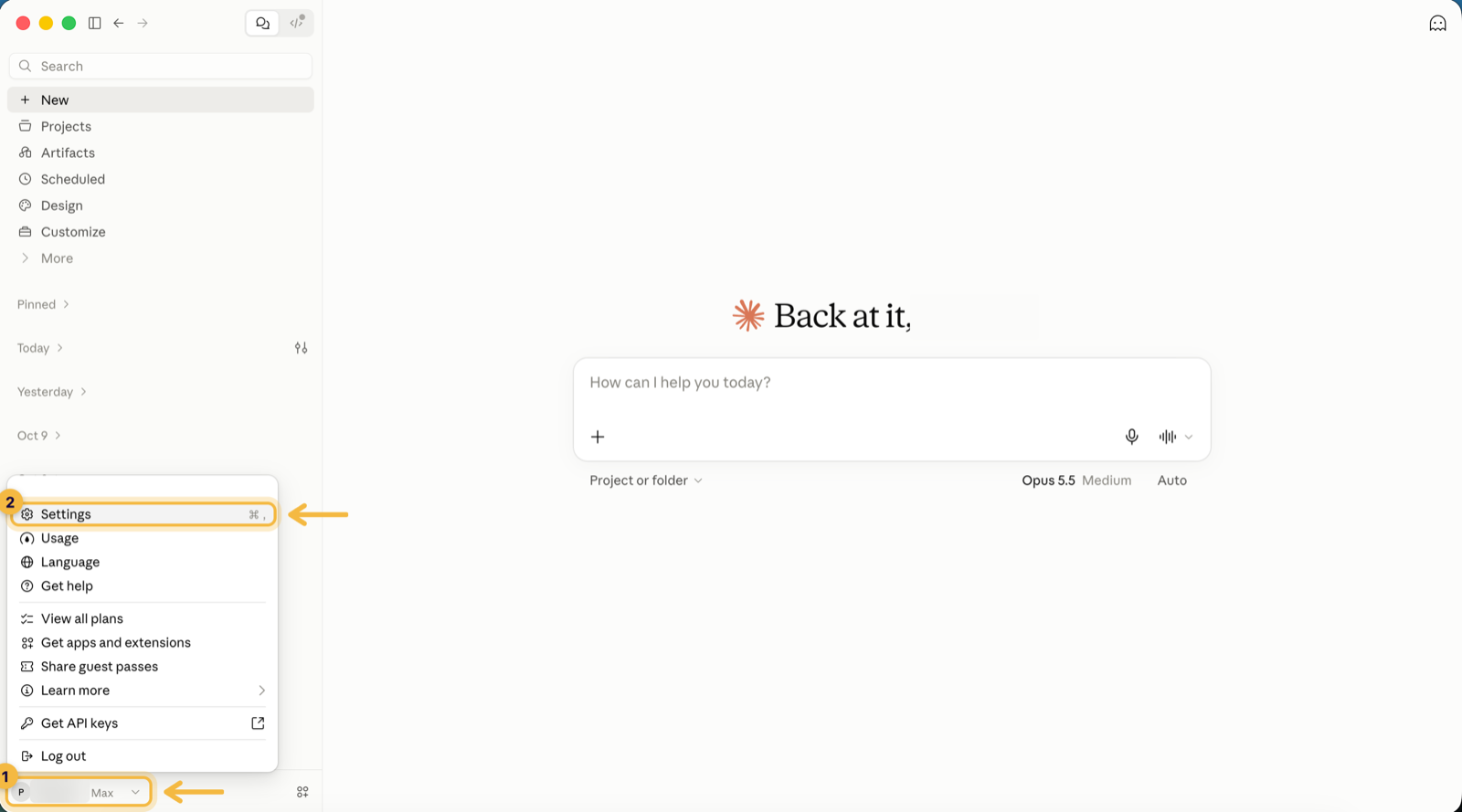
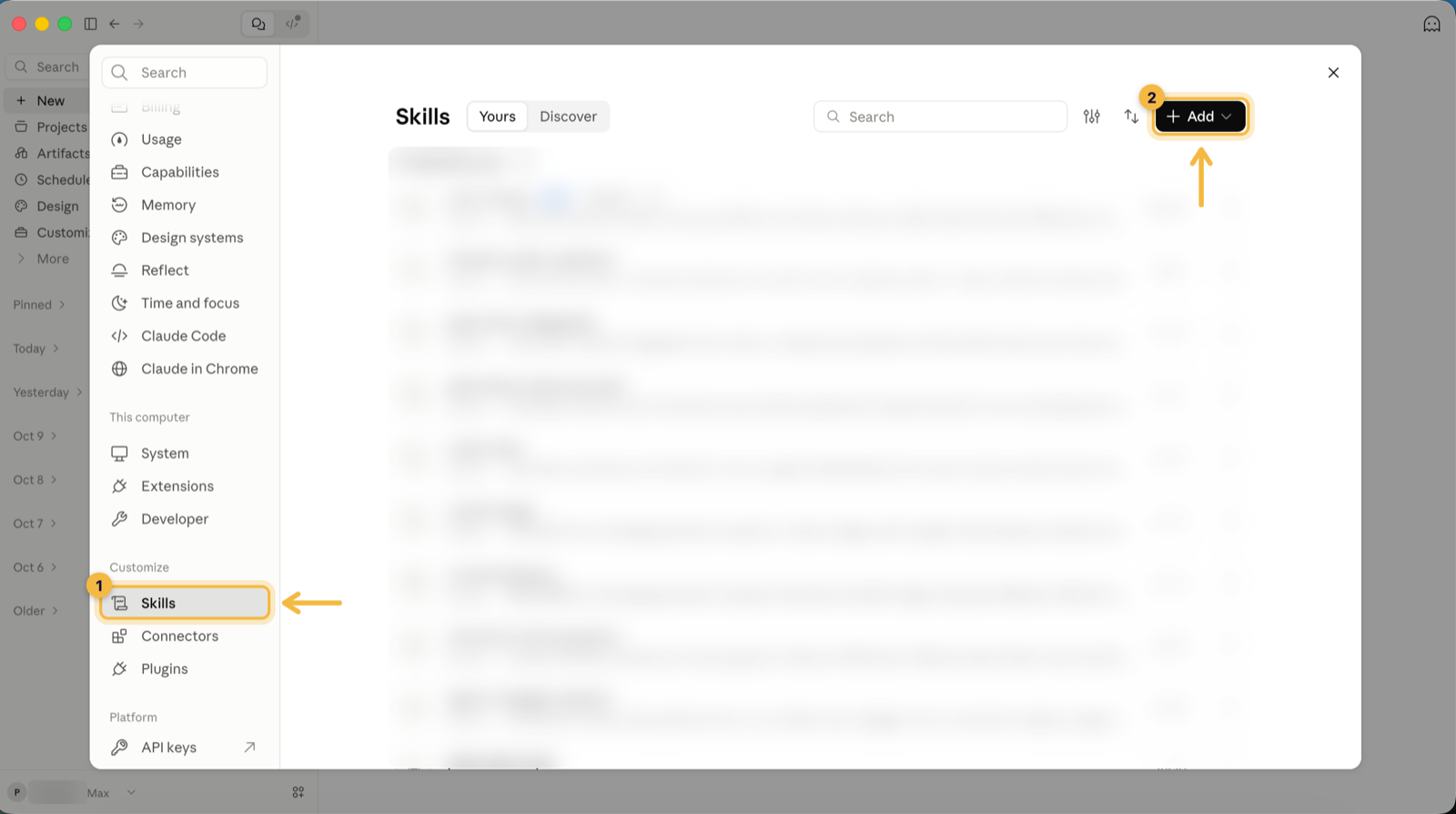
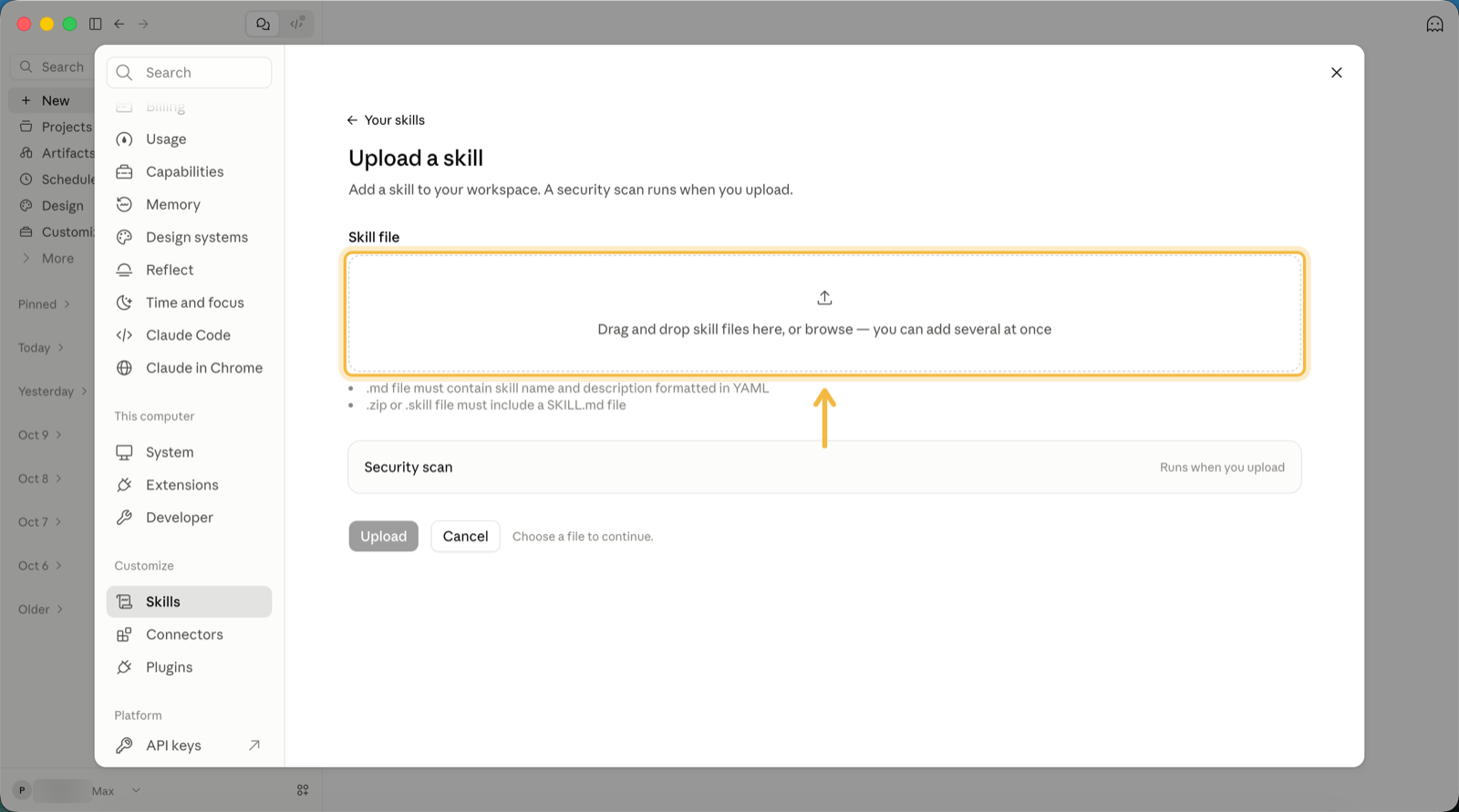
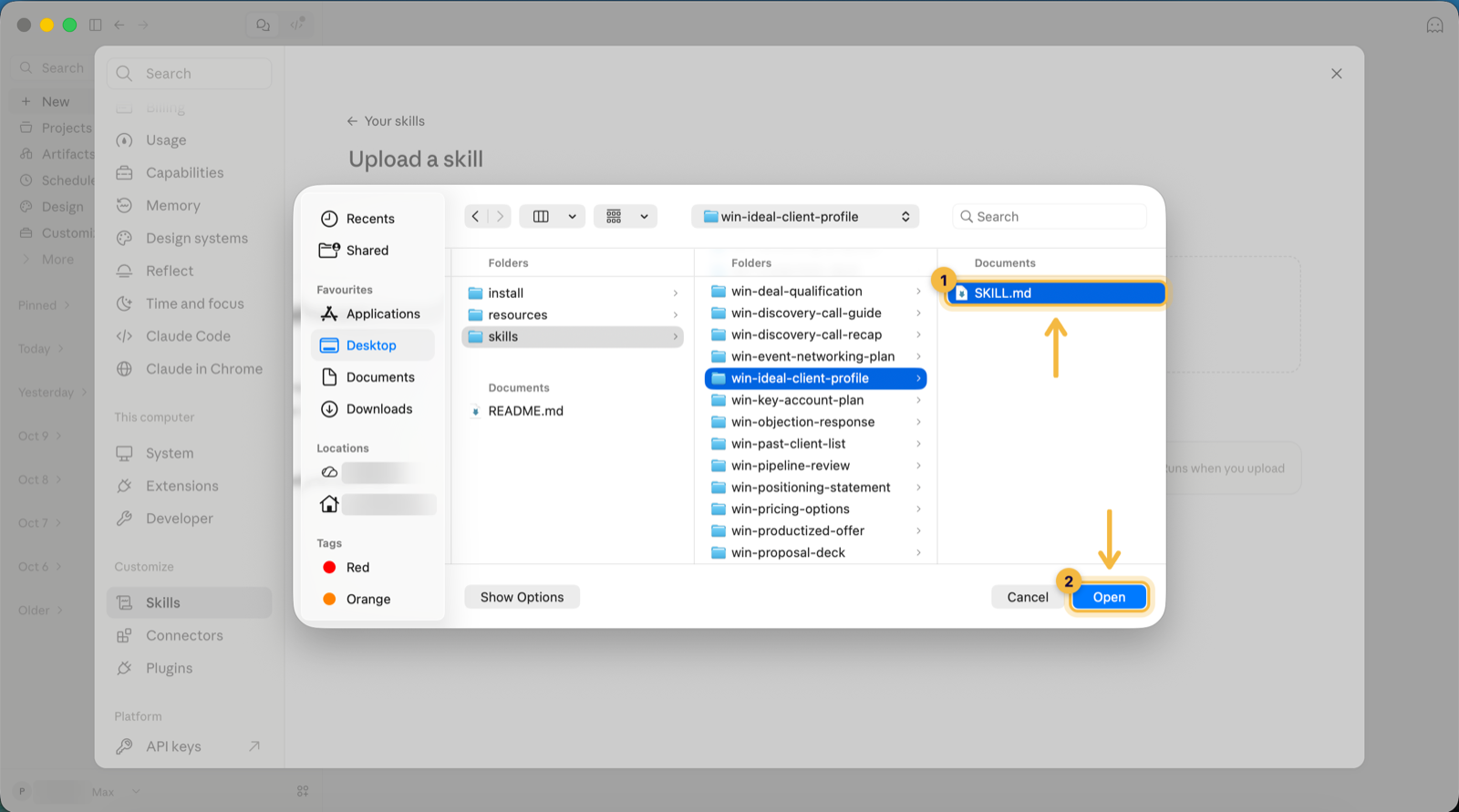
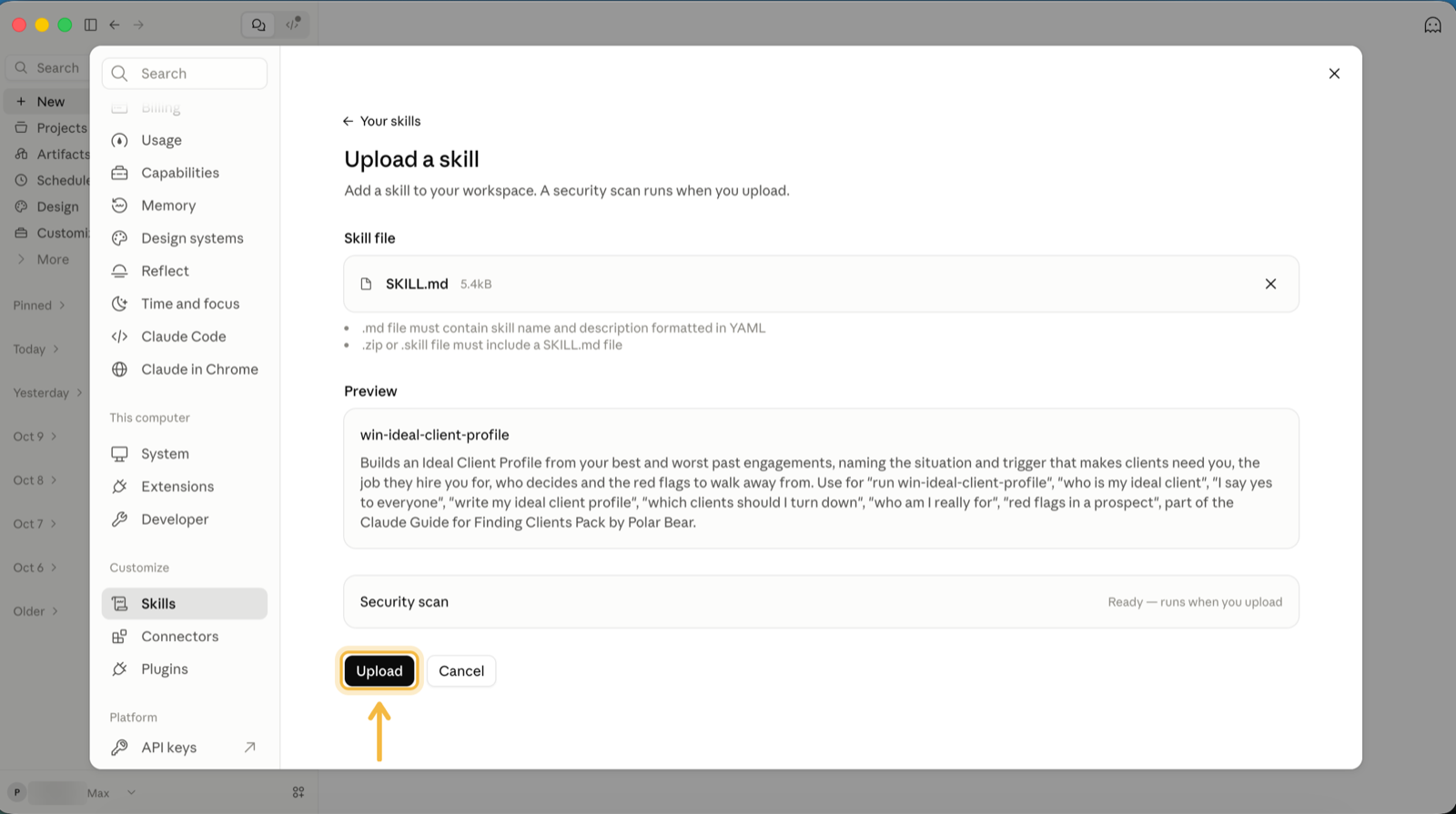
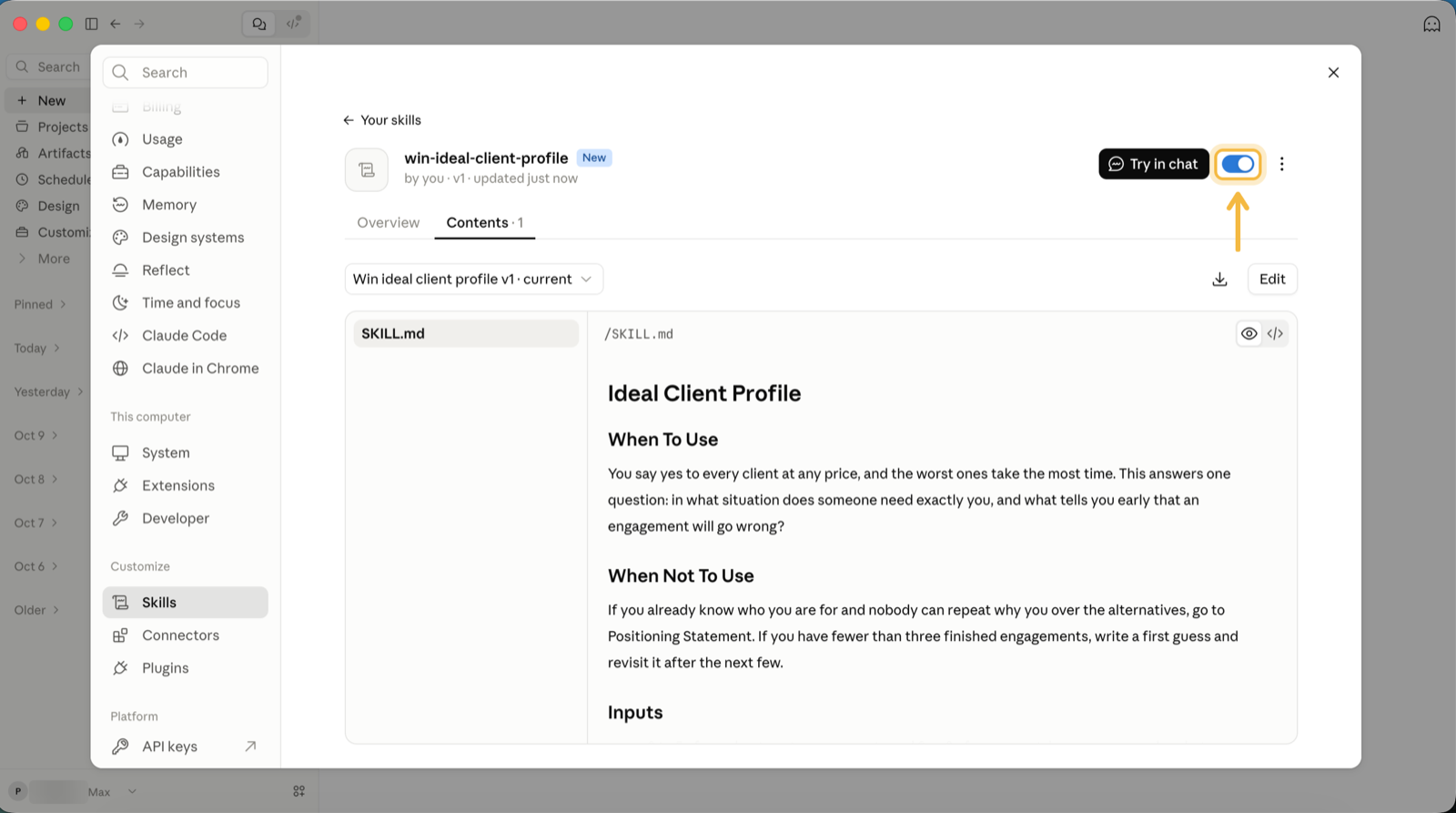
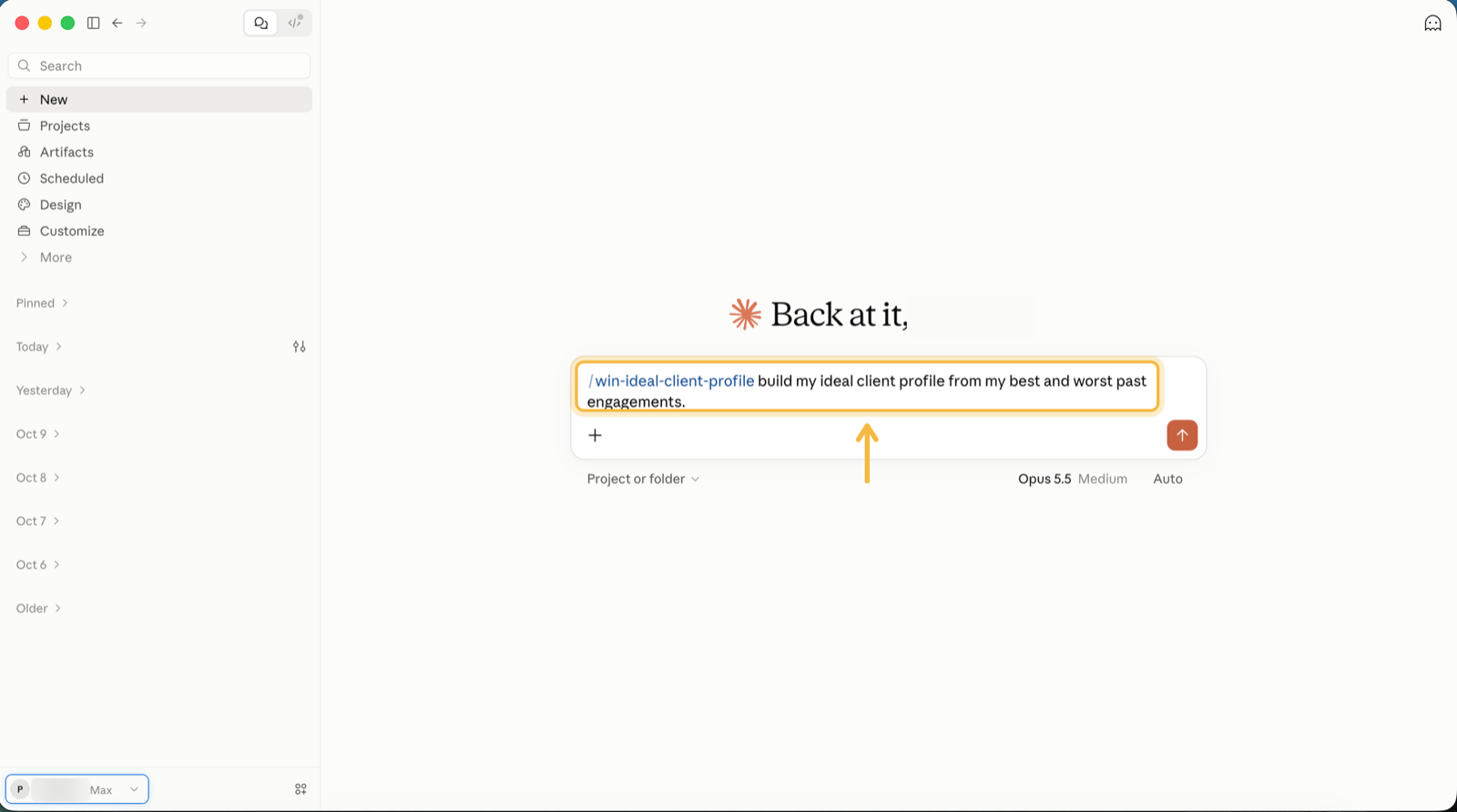
Using Claude on the web instead? Download the zip above and upload each skill from its install folder under Customize → Skills.
02The catalog
The 12 skills you get
Two skills write the program's rules, two keep it honest month to month, five carry one bet from a challenge to evidence, and three turn that evidence into a decision, a budget, or a dignified close.
1 · Write the rules, once
1
Program Charter Writer
Use when
You keep starting side projects and nobody can say what the program is for or who owns the money
Output
The one page that lets a program say no: why it exists, what counts as an initiative, the target ambition mix, the money and time envelope, who decides what, and the review rhythm. Run it first — every other skill in the pack reads the charter
2
Stage Gate Designer
Use when
Your gate meeting either waves everything through or kills the interesting ones
Output
Three or four stages with one decision per gate, questions instead of scores, a small funding round per stage, a way back one stage instead of dying, and kill criteria agreed while nobody's project was on the table
2 · Keep the program honest
3
Innovation Ledger Keeper
Use when
Leadership asks what the program delivered and all you have is a list of activities
Output
The program's accounting: leading indicators per initiative and per stage, plus program-level measures — cycle time, kill rate, learning velocity, money by stage. One line per initiative per month, the same columns every time. First run after the charter and the gates, then monthly
4
Portfolio Mapper
Use when
You have nine things going and suspect they are all the same kind of bet
Output
Every live initiative placed on ambition and stage, the mix held against what the charter promised, and the crowding and the holes named in plain words. It does not rank initiatives; it shows the firm what shape its bets have
3 · Take one bet from challenge to evidence
5
Innovation Challenge Framer
Use when
The partners want you to “do something with AI for clients” and that is the whole brief
Output
A problem statement with edges: who has the problem, what it costs them, what a good answer would have to be true of, and what is out of bounds. Deliberately narrow — narrow challenges produce testable ideas, wide ones produce posters
6
Ideation Session Runner
Use when
You have a challenge, a Friday afternoon and twelve people
Output
The format the challenge needs — pitch hour, sketch sprint, worst-idea round, client-signal harvest — with selection rules that keep the partner's opinion from being the vote, and an exit that is two or three idea one-pagers rather than a wall of notes. Claude does not generate the ideas
7
Discovery Interview Planner
Use when
Somebody should talk to customers before the prototype, and nobody has said who or what to ask
Output
The conversations an idea needs before anything is built: who, how many, the guide, consent, the note template, and the synthesis into evidence. Claude plans them and turns the notes into evidence; it never has the conversation or plays the customer
8
Experiment Designer
Use when
You think agencies would pay for this, and you want to find out in three weeks without building it
Output
The assumptions mapped, the riskiest one picked, and an experiment card naming the method, the number that means pass, the number that means fail, and the date — all written before the test runs, because afterwards every number looks like the one you meant
9
Experiment Results Reader
Use when
The landing page got 41 signups and everyone in the room has an opinion about whether that is good
Output
The results held against the card the team wrote first, with neither side renegotiating the numbers: the learning in one paragraph, and a scale, pivot, persevere or kill recommendation for a named human to decide on. Results with no prior card are a story, and get treated as one
4 · Decide, fund, or close
10
Gate Review Preparer
Use when
The gate review is Thursday and the team has thirty slides
Output
One initiative ready for one gate: the one-page evidence brief in the shape every initiative uses, the gate's own questions and kill criteria to be read before the team speaks, a ten-minute script, and the decision record with one name on it
11
Investment Case Writer
Use when
Budget season, and the program has to justify its existence in a way that survives the CFO
Output
The case for continued investment in the currency the program actually produces, which is reduced uncertainty: what was learned, what was stopped and why, the portfolio against the target mix, and what the next round costs — in the units the charter used. It will not dress a quarter with no decisions as momentum
12
Initiative Sunset Writer
Use when
You are stopping the client-portal idea and the two people who ran it are taking it personally
Output
The memo that records the decision and the honest reasons, the harvest of what can be reused, and the message to the team and to the customers who took part. It writes the decision as the decider's, never as the people's — and it will not run without a signed one
03How to use it
Pick the workflow that matches your week
One Innovation HQ project carries the program and every bet inside it. Program Charter Writer runs first and writes the charter everything else reads.
Write the rules once
Side projects keep starting and nobody owns the budget.
Every skill in the pack holds the same standard, the one we hold when a firm is spending real money to find something out:
Evidence comes from the market and decisions come from named humans: Claude designs the test and keeps the ledger, and never simulates a customer, scores an idea, or makes the kill call
Kill criteria are agreed before anything enters the pipeline — a criterion invented during the review is an opinion with a number on it
One gate asks one question and produces one decision, on a brief shaped the same for every initiative, so reviewers compare evidence and not presentation skill
Pass and fail thresholds are written on the card before the experiment runs, because afterwards every number looks like the one you meant
Results with no prior card are a story rather than an experiment, and get read as one
The ledger is boring by design: one line per initiative per month, the same columns every time — a ledger whose columns change every quarter is a slideshow
The portfolio map shows the shape of the firm's bets; it never ranks them
Every gate decision carries a name, and a stop with no signature is not written up, because an initiative stopped without one gets quietly restarted by whoever loved it
An initiative is closed with the decision separated from the people: how a firm stops things decides whether anyone proposes the next one
07FAQ
Questions people ask
What is in the Innovation pack?
12 Claude skills for running an innovation program. Two write the rules once, two keep the ledger and the portfolio map, five take one bet from challenge to evidence, and three help you decide, fund, or close.
How do I install these Claude skills?
In Claude Code, two lines install all 12 at once. In Claude.ai or Claude Desktop, download the zip, open Settings, Skills, Add, and upload the skills you want. Either way it takes about five minutes.
Do I need Claude Code to use them?
No. The skills work in Claude.ai, Claude Desktop and Claude Code. In the app you upload them yourself; in Claude Code one command installs the whole pack.
Do the skills work with ChatGPT or other assistants?
They are built as Claude Skills, and installing them is a Claude feature. Each one is a plain Markdown file, so you can read it and reuse the method elsewhere, but it will not load and trigger by itself outside Claude.
Will Claude decide which ideas to kill?
No. Evidence comes from the market, and decisions come from named humans. Claude designs the test and keeps the ledger. It never simulates a customer, scores an idea, or makes the kill call.
Is the pack free?
Yes. It is free to use inside your company and in client work, and not for resale. There is no signup: the download and the install command are on this page.
08Who made this
Lantern, by Polar Bear
These skills were written by Polar Bear, a people ops consultancy that runs its own company on Claude. The pack is free, and the same skills are open on GitHub.
Lantern is Polar Bear's content workspace. It turns your notes, documents and call transcripts into drafts for LinkedIn and other networks. You review them and publish the ones you like.